UK landlines are moving away from the Public Switched Telephone Network (PSTN) and ISDN. For most customers, the upgrade is expected to be complete by January 2027, with services moving to internet based alternatives such as VoIP and digital voice. This is an industry led change, not a government programme, but the impact on businesses is very real. Source: https://www.gov.uk/guidance/uk-transition-from-analogue-to-digital-landlines
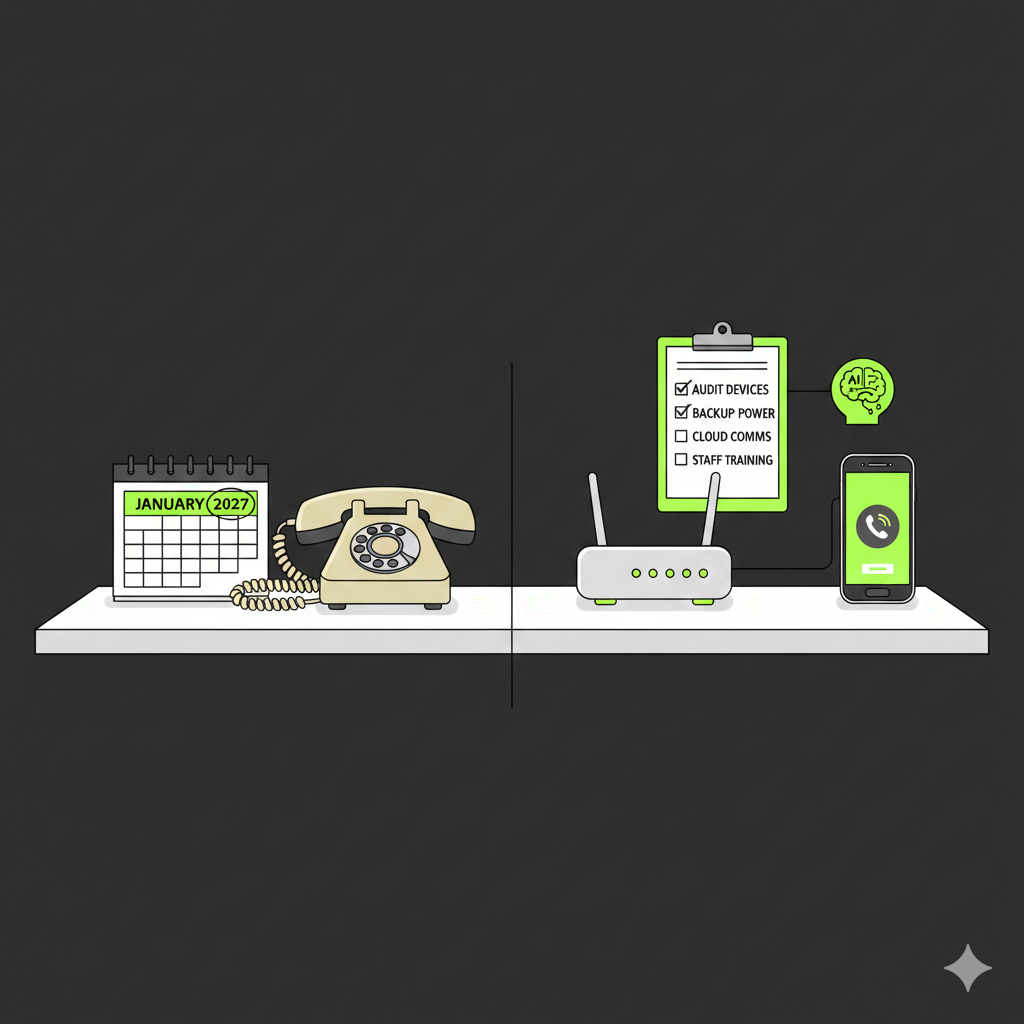
If you are a UK business that still relies on legacy phone lines for calls, payments, alarms, or building systems, the safest move is to treat 2027 like a hard operational deadline. The best outcome is not only staying connected, but coming out of the migration with a call experience that is faster, more trackable, and easier to automate.
What the PSTN switch off means in plain English
The PSTN is the old analogue network that powers traditional landline calling. It is being retired and replaced with digital services delivered over an internet connection, for example Voice over Internet Protocol. ISDN, a related digital service used for telephony, is also being switched off. Source: https://www.gov.uk/guidance/moving-landlines-to-digital-technologies
For many businesses, the migration can look simple on the surface. You may plug a handset into a router instead of a wall socket, or move to a hosted phone system. But the complexity usually hides in the devices you forgot were using the phone line.
The real business risk is not the handset
Government guidance is clear that communications providers will not know what non voice devices are connected to your line. That means it is on you to find them and plan upgrades. Source: https://www.gov.uk/guidance/uk-transition-from-analogue-to-digital-landlines
Common examples include:
- Building and security alarms
- Lift and elevator alarms
- Door entry and intercom systems
- Card payment terminals
- Legacy fax lines and specialist equipment
If any of these systems fail during the transition, the impact is not only inconvenience. It can be compliance risk, revenue loss, and safety risk.
A practical checklist for UK businesses
Use this as a starting point for a simple internal audit.
1. Identify what you pay for today
- Check your telecom bills and contracts
- Confirm whether you have PSTN, ISDN, or other legacy services
- List every location, every line, and every number that matters
2. Inventory every device that touches the phone line
Walk the building and ask a blunt question: what breaks if the old line disappears.
- Alarm panels and monitoring equipment
- Payment terminals and backup dial lines
- Lift emergency phones
- Reception and front desk phones
- Any analogue adapters or legacy PBX equipment
3. Plan for power cuts
With analogue landlines, some basic corded phones could work during a local power cut because the line carried a low voltage feed. Digital voice does not work the same way. Handsets and routers rely on local power, so you need a resilience plan. Source: https://www.gov.uk/guidance/uk-transition-from-analogue-to-digital-landlines
At minimum:
- Decide what must keep working during an outage
- Put battery backup on critical networking and voice equipment
- Ensure your team knows what the fallback is, for example a mobile phone plan
Migration options and what to ask vendors
There are multiple ways to move to digital voice. The right choice depends on your scale, your support requirements, and whether you need call centre functionality.
Questions to ask any provider:
- What happens to emergency calling during a power cut
- How do you handle number porting and multi site routing
- Can you support call recording and retention policies
- What integrations exist for CRM, helpdesk, and analytics
The opportunity most businesses miss
Many teams treat the PSTN migration as a technical project. They move calls to VoIP and stop there.
But inbound calls are one of the highest value channels for many businesses. Calls carry buying intent, urgency, and context. If you are not capturing that information, you are losing money quietly.
The modern call stack is not only a phone line. It is routing, documentation, automation, and measurement.
A product idea worth building during the switch
This is where Crudloop comes in.
Crudloop can be the AI layer that sits on top of your new digital voice setup, turning calls into actionable work.
What that looks like in practice:
- Smart routing so the right person answers based on intent, team, or customer type
- Automatic transcription and call summaries for every important conversation
- Follow up tasks created automatically, so deals and support issues do not get dropped
- Clean call logs that sync into your CRM or helpdesk, so the whole team has context
- Reporting that shows which calls convert, which get missed, and where revenue is leaking
The result is not only continuity after PSTN retirement. It is a measurable improvement in customer experience and sales operations.
A simple 30 60 90 day action plan
Days 1 to 30
- Complete your device audit
- Confirm your migration timeline with your communications provider
- Identify critical lines and critical call flows
Days 31 to 60
- Choose a digital voice approach and test number porting
- Validate every attached device in a controlled test
- Implement power resilience for your critical setup
Days 61 to 90
- Roll out company wide and train staff on the new call process
- Add automation and call documentation
- Measure missed calls, response times, and conversion outcomes
Closing
The UK PSTN and ISDN retirement is a deadline, but it is also a reset. If you treat it as a chance to modernise how your business handles calls, you can end up with a system that is more reliable, more trackable, and more profitable.
If you want help designing and building a modern inbound voice layer on top of your migration, book a call with Crudloop.
Sources
Let's implement these strategies together.
Get expert AI & full-stack development tailored to your startup's needs. Fixed monthly rate, unlimited revisions.
Schedule a Call